Don't Make Me Call My Uncle: A Designer's Take
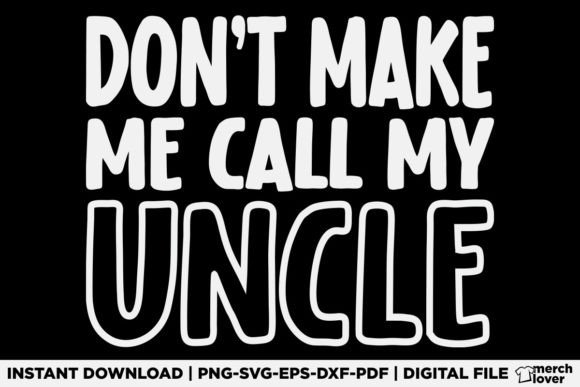
Every embroidery designer knows that some files are just fun to work with. When I first opened the “Don’t Make Me Call My Uncle” T-shirt design, that was the immediate feeling. It’s not a formal or overly sentimental piece. Instead, it has a playful, slightly cheeky personality that feels very modern and personal. The concept is clear—it’s a declaration, a gentle warning wrapped in humor, perfect for expressing a close, perhaps lovingly exasperated, family bond. This isn't a generic graphic; it has a specific mood, and that makes it interesting for a professional embroiderer to evaluate for real projects.
Where This Design Finds Its Home
First impressions matter in our business. This design isn’t sprawling or overly detailed. Its strength is its straightforward, bold statement. That means it naturally belongs on items where the message is the centerpiece. I pictured it immediately on a custom sweatshirt for a grandpa, a crisp apron for a dad who’s the kitchen king, or a sturdy tote bag for a mom who runs the family. The wording lends itself to personalized gifts, so thinking about holiday gifts, Father’s Day presents, or even a quirky wedding gift for a beloved uncle feels right.
For my craft business or an Etsy listing, I’d lean towards applying it to high-quality, everyday items. A well-embroidered pillow cover in a family den or a tea towel in a kitchen adds a touch of personality to home decor. As a boutique product, it could work beautifully on a high-end cotton cap or a soft blanket. Because the theme is about family connection, it also fits nursery decor or a personalized baby item celebrating a special uncle or grandparent. The key is pairing it with a product that matches its casual, affectionate tone.
The Practical Stitching Scenario
Let’s talk about the embroidery file itself in a real-life scenario. Say I’m preparing to stitch this onto a premium cotton sweatshirt for a client. My mind goes straight to the lettering. “Don’t Make Me Call My Uncle” is the core. The clarity of that text after stitching is paramount. For visual appeal and stitching clarity, I’d want to ensure the font style translates well into satin stitches or clean fill stitches. On light fabric, a bold thread choice would make it pop; on a dark sweatshirt, I’d plan for excellent thread color contrast, possibly using a bright white or a contrasting color to maintain readability.
This design, being a graphic centered on text, likely has areas of consistent stitch density. That’s good for product durability, especially for items like tote bags or aprons that see wear. However, it means on thinner or stretchy fabrics, like a basic t-shirt, I’d need a robust stabilizer to prevent puckering and ensure the handmade presentation remains crisp. For curved surfaces like caps, I’d need to check how the layout adapts—the linear nature of the phrase might require careful positioning to look balanced on a rounded crown.
Navigating the Tricky Details
Any design with a clear statement has areas where careful application is key. With “Don’t Make Me Call My Uncle,” I’d be cautious on very small hoop sizes. If the text is scaled down too much for a tiny baby item or a small patch, the lettering detail could become cramped, affecting stitch clarity. Similarly, on heavily textured fabrics like a thick blanket, the finer details might get lost. I always advise testing the design on scrap fabric first, using the actual thread colors you plan to use.
Another consideration is the product’s life. For items that need frequent washing, like kitchen towels or baby clothes, a denser stitch area can hold up better, but it must be applied correctly from the start. Checking the stitch density in the file beforehand is a step that protects customer trust in the finished product. For commercial embroidery projects where I’m producing multiples, consistency in how this design appears is vital for brand consistency and professionalism.
Why It Works for Creative Entrepreneurs
From a business perspective, this embroidery design has good giftability and recognition. It speaks directly to a relationship, making it an engaging choice for a buyer looking for a meaningful, custom apparel item. For an Etsy seller or small shop owner, it can become part of a collection focused on family humor, increasing buyer engagement. When used in printable mockups for digital product previews, its clear message helps potential customers instantly understand the product’s application.
The value for a digital product seller or a creative entrepreneur is in its versatility as a design asset. It’s not limited to t-shirt designs; it’s a graphic that can be adapted. As an embroidery project, it can be the centerpiece of a simple, high-quality item or an accent on something more complex. This flexibility aids in crafting a cohesive line of merchandise for a craft fair or boutique branding.
A Few Designer Notes Before You Hoop It
Before running this machine embroidery design for a client order or your own handmade product, here are my practical notes. Always test it on both light and dark fabric backgrounds if you plan to offer both options. Inspect the small details in the file—are there any decorative accents or tiny corners that might need a specific stitch type like a running stitch for definition? Compare it in black and white mockups to judge its form without color.
Confirm the hoop size you intend to use is appropriate for the design’s scale. Use proper stabilizer matched to your fabric texture—don’t guess. Most importantly, check whether the design works for both personal and commercial projects. The product description suggests it’s for various occasions, but always confirm the licensing before selling finished items or including it in your commercial embroidery offerings. This final step is non-negotiable for professionalism and peace of mind.
In the end, “Don’t Make Me Call My Uncle” is a design with personality. It won’t fit every project, but for the right one—a playful gift, a family-focused product, or a custom item with a story—it can stitch up into something truly special. It reminds us that embroidery isn’t just about decoration; it’s about conveying a feeling, and this file certainly has one to share.